Pre-Trip Call
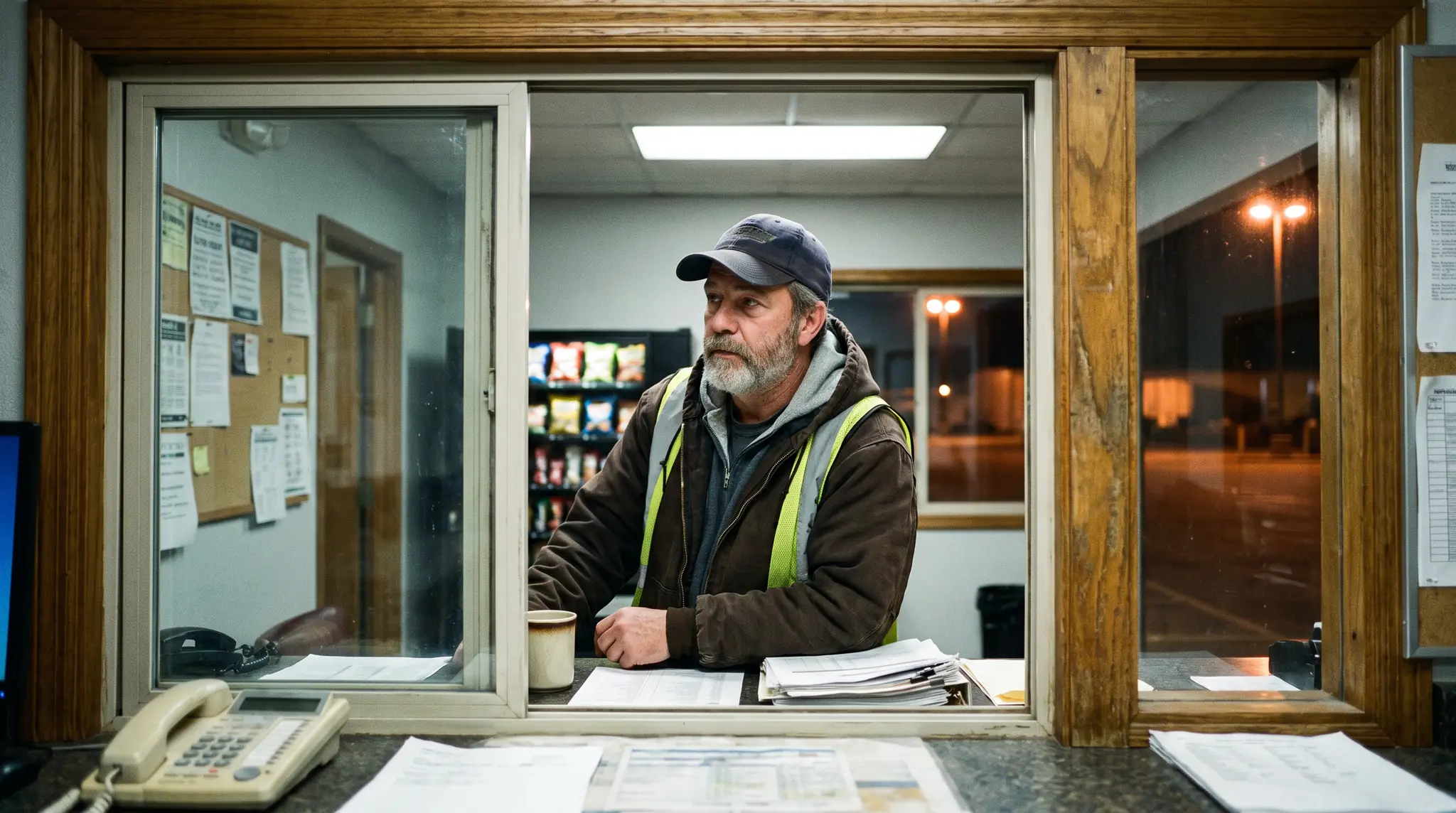

DispatchClock in when you're ready.
5:40 a.m. The dispatch window.
You're the supervisor on duty. Watch one driver, write down what you notice, make the call, and keep the paperwork straight.
Sound plays after you clock in
Write down only what you saw, heard or smelled this morning.
One morning, taught in DOT Reasonable Suspicion Training
Your notes
What you saw, heard or smelled yourself this morning, written so someone who was not there can see it. Not conclusions, rumors or things that did not happen.
Course modules: Module 3: Observable Indicators: Appearance, Behavior, Speech, Odors · Module 4: Making the Call: What “Specific, Contemporaneous, Articulable” Means
49 CFR 382.307(a)-(c)
The call
Alcohol test, drug test, both or neither: the one your observations support. And who may run the breath test.
Course modules: Module 7: Ordering the Right Test: Alcohol vs. Controlled Substances
49 CFR 382.307(a)-(c)
The record and the clock
When the written record gets signed, and what the 2-hour and 8-hour alcohol test clocks require when the test runs late.
Course modules: Module 5: Documentation That Stands Up in an Audit · Module 8: Timing Rules: On-Duty, Pre-Duty, and Post-Incident Nuances
49 CFR 382.307(e), (f)
Questions about Pre-Trip Call
Is Pre-Trip Call free, and do I need an account?
It is free and needs no account. The report is shown on the page; an email address is only needed if you want a copy sent to you.
Does playing Pre-Trip Call count as reasonable suspicion training?
No. 49 CFR 382.603 requires every person who supervises CDL drivers to get at least 60 minutes of training on alcohol misuse and another 60 minutes on controlled substances. Pre-Trip Call is a free practice game. DOT Reasonable Suspicion Training is the full two hours, online and self-paced, with a certificate.
How accurate is the game?
The rules come from 49 CFR 382.307 as published on the eCFR: the call rests on specific, contemporaneous, articulable observations of appearance, behavior, speech or body odor, made by a trained supervisor; the supervisor who makes the call does not run the alcohol test; an alcohol test that takes more than 2 hours needs a record of why, and attempts stop at 8 hours; and the written record is signed within 24 hours or before any result is released, whichever is first. Dale and his mornings are made up, and the signs shown are examples, not a checklist. Your company policy and your designated employer representative handle the rest.
What does a morning cover?
You see one driver at the dispatch window, up close at the counter and on his way to the truck, and write down what belongs in the record. Then you decide whether there is reasonable suspicion and for which test, who runs the breath test, when to sign the record, and what the clock requires if the alcohol test runs late. Each run deals one of three mornings, and one of them calls for no test at all.
Turn the morning into a certificate
DOT Reasonable Suspicion Training is the 60 minutes on alcohol and 60 minutes on controlled substances that 49 CFR 382.603 requires of every supervisor of CDL drivers. Online and self-paced, in English or Spanish, with a certificate when you finish.